Mastering Maritime Craft: A Guide to Sailing Ships Laser Cut SVG Designs
The intersection of traditional nautical aesthetics and modern digital fabrication has opened a vibrant avenue for creators, artisans, and small business owners. At the heart of this creative movement lies the Sailing Ships Laser Cut SVG, a digital asset that bridges the gap between historical maritime elegance and contemporary manufacturing capabilities. Whether you are a hobbyist looking to personalize a home office or a professional manufacturer producing boutique coastal décor, understanding the nuances of these vector files is essential for achieving high-quality results.
This comprehensive guide explores the practical applications, technical considerations, and creative potential inherent in using sailing ship-themed designs for laser cutting, CNC routing, and vinyl crafting. By delving into the specifics of file formats, material compatibility, and design adaptation, we aim to provide a clear roadmap for transforming digital vectors into tangible, dimensional art.
The Versatility of Vector Formats in Digital Fabrication
When sourcing designs for physical production, the file format is just as critical as the artistic content. A robust Sailing Ships Laser Cut SVG bundle typically includes a suite of formats such as SVG, DXF, EPS, and PDF. Each serves a distinct purpose within the workflow of different machines and software ecosystems.
- SVG (Scalable Vector Graphics): This is the industry standard for web-based design tools and many consumer-grade cutters like Cricut and Silhouette. Its primary advantage is scalability; the image can be resized infinitely without losing resolution, ensuring crisp edges whether the final product is a small pendant or a large wall mural.
- DXF (Drawing Exchange Format): Often preferred by users of industrial CAD software and specific laser cutter interfaces, DXF files provide precise geometric data that ensures accurate toolpaths for machines like OMTech and xTool.
- EPS and PDF: These formats are invaluable for professional graphic designers using Adobe Illustrator or CorelDraw. They preserve layer information and vector paths, allowing for complex editing before the file is sent to the machine.
Having access to all four formats ensures that the creator is not locked into a single software ecosystem. It allows for seamless transitions between design phases, from initial concept tweaking in a vector editor to final execution on a Glowforge or CNC router. This flexibility is particularly important when adapting a single Sailing Ships Laser Cut SVG design for multiple production methods, such as switching from cutting wood to engraving acrylic.
Material Selection and Finishing Techniques
The aesthetic impact of a laser-cut sailing ship is heavily dependent on the material chosen. The clean lines of these vector files are designed to interact beautifully with a variety of substrates, each offering a unique texture and finish.
Wood and Plywood
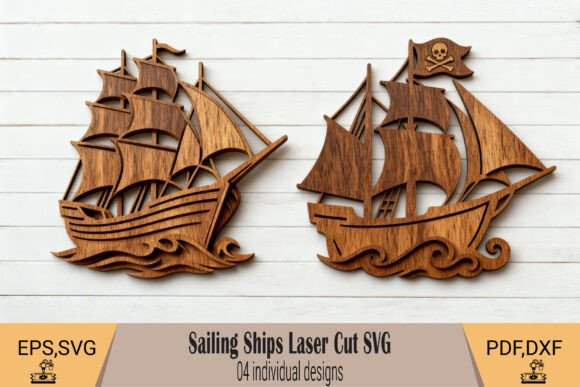
For a classic, rustic look, wood remains the premier choice. Birch plywood is popular for its light color and smooth grain, which takes stain and paint exceptionally well. When cutting a galleon or tall-ship silhouette from wood, the laser creates a slight char on the edges, adding a natural definition that enhances the vintage feel of the vessel. Creators often use layered wood techniques, stacking multiple cuts of varying thicknesses to create a 3D topographical effect, giving the ship depth and shadow.
Acrylic and Modern Polymers
For a more contemporary or nautical-instrument aesthetic, acrylic is an excellent medium. Transparent or mirrored acrylics can mimic the look of glass portholes or water. When using a Sailing Ships Laser Cut SVG on acrylic, the flame-polished edges created by the laser add a premium, finished look without the need for sanding. This material is ideal for signage, illuminated displays, or sleek home accent pieces.
Metal and Composite Materials
While less common for hobbyists, fiber lasers can cut thin metals using these same vector paths. Metal sailing ship cutouts make for durable outdoor signage or high-end architectural elements. The precision required for metal cutting underscores the importance of optimized vector files that eliminate redundant nodes and ensure smooth curves.
Post-processing is where the true artistry emerges. Once the pieces are cut, they can be sanded, stained, painted, or sealed. A common technique involves dry-brushing gold or silver paint over the raised edges of a wooden ship to simulate sunlight hitting the rigging. Alternatively, creators may integrate LED lighting behind a layered acrylic design to create a glowing maritime beacon.
Diverse Applications Across Industries
The utility of these designs extends far beyond simple wall hangings. The adaptability of the Sailing Ships Laser Cut SVG allows it to serve diverse markets and functional needs.
Interior Design and Home Décor
In coastal-themed interiors, these silhouettes serve as focal points. Large-scale cutouts can be mounted directly onto feature walls, while smaller versions act as shelf decor or mantel accents. The ability to scale the motif means a single design file can populate an entire room with consistent thematic elements, from door hangers to clock faces.
Boutique Retail and Gifting
Small business owners often utilize these bundles to create bespoke gift products. Personalized ornaments, keychains, and wedding favors featuring sailing ships appeal to customers seeking unique, handcrafted items. The "ready-to-use" nature of the files significantly reduces design time, allowing makers to focus on production volume and quality control. For instance, a vendor at a seaside market could rapidly produce a line of custom-engraved wooden coasters using these templates.
Educational and Historical Projects
Educators and museum curators can leverage these designs for interactive exhibits or classroom models. Building a scaled model of a historic galleon helps students understand naval architecture and history. The precision of laser cutting ensures that intricate details like masts, sails, and rigging are accurately represented, providing a tactile learning tool that is both durable and visually engaging.
Workflow Optimization for Makers
Efficiency is key in digital fabrication. Working with high-quality Sailing Ships Laser Cut SVG files streamlines the production process. Because the vectors are pre-optimized, users spend less time fixing broken paths or adjusting anchor points. This reliability is crucial when running batch jobs on machines like the Cricut Make It or Silhouette Studio, where a single error in the file can ruin expensive materials.
Creators should adopt a workflow that includes test cuts on scrap material. This step verifies the kerf (the width of the material removed by the laser) and ensures that interlocking parts fit together correctly if the design involves assembly. Furthermore, organizing files by project type—such as separating standalone wall art from furniture accents—helps maintain an orderly digital library, facilitating quicker retrieval for future orders.
Integration into Larger Projects
These sailing ship motifs are rarely limited to standalone use. They are frequently integrated into larger décor panels, headboards, or cabinet doors. By combining the ship silhouette with other nautical elements like waves, compasses, or lighthouses, designers can create complex scenes. The modular nature of SVG files allows for easy manipulation, enabling the user to rotate, flip, or resize individual components to fit specific spatial constraints.
Considerations for Commercial Use and Quality
For those intending to sell products made from these designs, understanding the licensing and quality standards is paramount. High-quality bundles provide clean, closed paths that prevent the laser from making unnecessary movements, which saves time and reduces wear on the machine. The inclusion of multiple formats ensures compatibility with a wide range of hardware, from entry-level diode lasers to professional CO2 systems.
Moreover, the aesthetic consistency of the designs matters. A well-curated collection will feature ships with historically plausible proportions and elegant lines, avoiding the clunky or overly simplified looks found in lower-quality clip art. This attention to detail translates directly to the perceived value of the final physical product. Customers are willing to pay a premium for items that exhibit craftsmanship and attention to detail, qualities that begin with the source file.
Embracing the Nautical Trend
The enduring popularity of maritime themes ensures that sailing ship designs remain a staple in the maker community. From the rugged charm of a weathered wooden galleon to the sleek modernism of an etched glass silhouette, the possibilities are endless. By utilizing a comprehensive Sailing Ships Laser Cut SVG bundle, creators gain the tools necessary to tap into this timeless aesthetic.
Whether the goal is to decorate a personal space, launch a new product line, or educate the next generation about naval history, these digital templates offer a solid foundation. The convergence of accessible technology and high-quality design assets empowers individuals to bring their visions to life with precision and style. As the field of digital fabrication continues to evolve, the role of versatile, well-constructed vector art will only grow, serving as the blueprint for innovation in the world of handmade and custom goods.
Ultimately, the success of any project lies in the execution. By selecting the right materials, mastering the software workflow, and applying creative finishing touches, makers can transform a simple digital file into a cherished piece of art. The journey from screen to physical object is where the magic happens, and with the right sailing ship templates, that journey is smooth, efficient, and immensely rewarding.