Strategic Deployment of Welcome Sign Laser Cut Wall Art for Brand and Home Impact
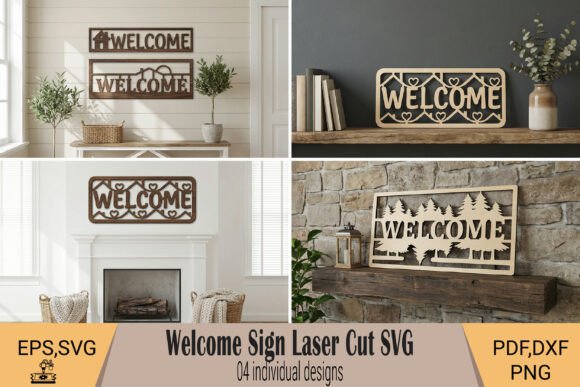
The first impression of a physical space, whether it is a residential entryway or a small business storefront, sets the tone for every interaction that follows. In the realm of interior design and brand positioning, the Welcome Sign Laser Cut Wall Art represents more than a decorative element; it is a strategic tool for communication. This collection, featuring approximately four individual designs with distinct decorative borders and clean lettering, offers creators and homeowners a versatile foundation for establishing atmosphere. By utilizing files provided in SVG, DXF, EPS, and PDF formats, users can leverage CNC machines, laser cutters like Glowforge, or scroll saws to produce high-fidelity wall decor from wood, MDF, plywood, or acrylic. The decision to integrate these pre-designed assets into your workflow should be driven by a clear understanding of your goals, material constraints, and the specific narrative you wish to convey to your audience.
Optimizing Production Workflows with Pre-Engineered Designs
For entrepreneurs, crafters, and small business owners, time is often the most scarce resource. Developing unique vector layouts from scratch requires significant investment in graphic design software proficiency and creative iteration. The strategic value of this Welcome Sign Laser Cut Wall Art set lies in its ability to bypass the initial design bottleneck while maintaining a professional aesthetic. Each design offers a slightly different decorative frame while maintaining a cohesive style, allowing for batch production or varied offerings without sacrificing brand consistency.
When approaching production, consider the compatibility of these files with your specific machinery. The inclusion of DXF and SVG ensures seamless integration with industry-standard tools like Cricut and Silhouette for smaller-scale projects, while EPS and PDF formats support the precision required by industrial CNC routers. A thoughtful operator will review the node density and line weights within these files before cutting. This preliminary step prevents material waste and machine downtime, ensuring that the final output matches the intended quality. By adopting these ready-to-cut designs, you shift your focus from creation to execution, optimizing your operational efficiency and increasing your capacity to fulfill orders or complete home renovation projects.
Material Selection and Environmental Context
The effectiveness of any wall decor is heavily dependent on the context in which it is displayed. These rectangular layouts are engineered to fit standard architectural features, making them ideal for display above shelves, fireplaces, or doorways in entryways, living rooms, and hallways. However, the choice of material fundamentally alters the perceived value and durability of the piece.
- Wood and Plywood: Best for farmhouse-style interiors or rustic branding. These materials offer warmth and texture but require careful finishing to prevent splintering on intricate border details.
- MDF: Provides a smooth surface ideal for painting, allowing for custom color matching to specific brand palettes or room themes. It is cost-effective for high-volume production but less resistant to moisture.
- Acrylic: Suitable for modern, minimalist, or corporate environments. Acrylic cuts cleanly with laser technology, offering a sleek, contemporary look that reflects light and adds depth to a space.
Selecting the right substrate is not merely an aesthetic choice; it is a functional decision based on the environment. A sign intended for a humid entryway in a coastal home requires different material considerations than one destined for a climate-controlled office lobby. Understanding these variables ensures long-term satisfaction and reduces the risk of product failure or customer dissatisfaction.
Strategic Applications Beyond Decoration
While the primary function of Welcome Sign Laser Cut Wall Art is decorative, its application can extend into broader strategic objectives for businesses and educators. For a retail boutique or a service-based business, the welcome sign acts as a silent ambassador. It communicates professionalism, attention to detail, and a commitment to quality before a single word is spoken. In this context, the clean lettering and decorative borders serve to reinforce brand identity.
Consider the use of these designs in educational settings or community centers. A well-crafted welcome sign can foster a sense of belonging and safety, signaling to visitors that they are entering a curated, cared-for space. For content creators and bloggers documenting their DIY journeys, using these high-quality files provides reliable "hero shots" for social media and tutorials, enhancing the perceived authority of their content. The versatility of the four included designs allows for A/B testing in physical spaces; a business owner might rotate signs seasonally to keep the environment fresh and engaging for repeat customers, thereby enhancing the overall customer experience without incurring the cost of custom design services for each iteration.
Risk Mitigation and Intentional Implementation
Despite the advantages, relying on pre-made assets without a clear strategy carries risks. The most common pitfall is the lack of customization, leading to a generic appearance that fails to resonate with a specific target audience. If a luxury brand utilizes a rustic, farmhouse-style wooden sign without adapting the finish or context, it creates a dissonance that can confuse customers and dilute brand equity. Therefore, it is crucial to approach the use of Welcome Sign Laser Cut Wall Art with intentionality.
Before committing to a cut, evaluate the following:
- Alignment with Goals: Does this specific design support the mood or message you are trying to project?
- Scale and Proportion: Will the rectangular layout dominate the wall appropriately, or will it get lost in a large foyer? Adjustments to the file scale may be necessary to achieve visual balance.
- Finish and Assembly: Have you planned for sanding, staining, painting, or mounting hardware? The raw cut is only 50% of the final product; the finishing touches determine the perceived quality.
Neglecting these considerations can result in wasted materials and a final product that feels like an afterthought rather than a deliberate design choice. Strategic planning involves anticipating these steps and allocating resources accordingly.
Long-Term Value and Scalability
The true power of this product lies in its scalability. For a hobbyist, it offers a low-barrier entry into creating professional-grade home decor. For a manufacturer, it provides a library of assets that can be endlessly reproduced and modified. Because the files are vector-based, they can be resized without loss of resolution, allowing the same design to be adapted for a small hallway nook or a grand entrance hall. This flexibility supports long-term planning, enabling users to expand their decor collections or product lines as needs evolve.
Furthermore, mastering the production of these signs builds technical competency. As operators become familiar with how different materials react to the specific paths defined in the SVG or DXF files, they gain insights that can be applied to more complex, custom projects. This learning curve transforms a simple purchase into an investment in skill development. Whether the goal is to enhance a personal living space or to generate revenue through a crafting business, the disciplined use of these tools fosters a mindset of continuous improvement and operational excellence.
In conclusion, Welcome Sign Laser Cut Wall Art is a potent resource when deployed with foresight. It bridges the gap between creative vision and practical execution, offering a structured pathway to achieving high-quality results. By carefully selecting materials, aligning designs with strategic goals, and respecting the nuances of the production process, users can transform simple digital files into impactful physical realities that endure. The decision to use these assets should be rooted in a desire for efficiency and quality, ensuring that every cut contributes meaningfully to the broader objective of creating welcoming, aesthetically pleasing environments.