Integrating the Wooden Hanging Planter Holder Lasercut Design into Your Creative Workflow
In the modern landscape of digital fabrication and small-scale manufacturing, the transition from concept to physical object relies heavily on the quality and compatibility of your digital assets. The Wooden Hanging Planter Holder Lasercut file represents more than just a pattern; it is a foundational component in a broader production workflow for creators, educators, and small business owners. Understanding how to effectively integrate this digital asset into your operations requires a clear grasp of file management, material science, and process optimization. This guide explores the practical application of this specific design, ensuring you can move seamlessly from download to finished product.
Understanding the Digital Asset and Its Role in Production
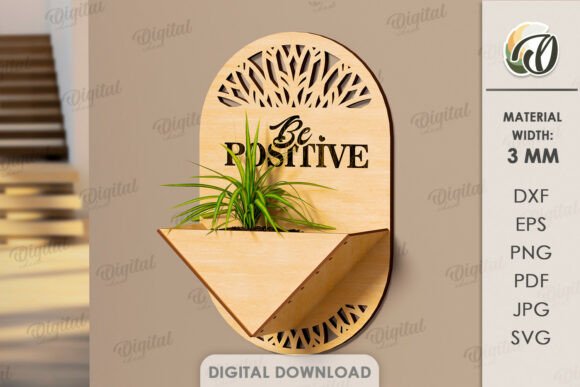
It is crucial to establish immediately that the Wooden Hanging Planter Holder Lasercut is a digital product. No physical goods are shipped; instead, you receive a comprehensive zip folder containing the design in multiple vector and raster formats: SVG, DXF, EPS, PDF, JPEG, and PNG. This multi-format approach is intentional, designed to fit into various software ecosystems and hardware configurations used by professionals today.
For a hobbyist using a desktop cutter, the SVG or DXF files might be the primary entry point, offering clean paths for cutting engines. Conversely, a professional graphic designer might prefer the EPS file for editing within Adobe Illustrator before sending it to a production floor. The inclusion of PDF and raster formats (JPEG, PNG) serves a dual purpose: they act as visual references for marketing materials and provide a quick-preview option for clients or collaborators who may not have vector editing software installed. By securing these files, you gain the flexibility to adapt the design to your specific workflow without being locked into a single platform.
Material Compatibility and Preparation
Successful execution of any lasercut project begins with material selection. The specifications for this particular design indicate a required material width of 3mm. This constraint is not arbitrary; it is engineered to ensure structural integrity and proper assembly of the hanging mechanism. Using material that deviates significantly from this thickness can result in joints that are too loose to hold weight or too tight to assemble without damaging the wood.
When preparing your workflow, consider the type of wood you intend to use. Plywood, MDF, and solid hardwoods all react differently to laser cutting. For a hanging planter, which must support the weight of soil and a plant, selecting a high-quality birch plywood is often the optimal choice due to its strength-to-weight ratio and clean cut edges. Before running the full job, it is best practice to perform a test cut on a scrap piece of your chosen 3mm material. This step verifies that your laser's power and speed settings are calibrated correctly to achieve a clean edge without excessive charring, which is essential for a finished product intended for home or office decor.
Strategic Integration into Business and Creative Workflows
The utility of the Wooden Hanging Planter Holder Lasercut extends beyond a single weekend project. For entrepreneurs and small business owners, this file acts as a scalable asset that can be integrated into a larger product line. Because the possibilities for creation are endless, this design can serve as a base for customization, allowing you to offer personalized versions for corporate gifts, educational kits, or boutique home decor.
Consider the workflow of a maker selling at local markets or through an online store. The process typically involves:
- Sourcing: Procuring bulk sheets of 3mm wood to reduce per-unit costs.
- Nesting: Using software to arrange multiple instances of the design on a single sheet to minimize waste.
- Production: Running the laser cutter, potentially overnight for larger batches.
- Post-Processing: Sanding edges, applying finishes, and assembling the units.
- Packaging: Preparing the final good for shipment or display.
By having a reliable, pre-tested digital file, you eliminate the time-consuming phase of initial design and prototyping. This allows you to focus your energy on scaling production, marketing, and customer service. The consistency provided by a professional-grade file ensures that every unit produced meets a high standard of quality, reinforcing your brand reputation.
Educational and Collaborative Applications
Educators and workshop facilitators will find significant value in this asset for teaching principles of design, engineering, and sustainability. The Wooden Hanging Planter Holder Lasercut provides a tangible example of how 2D designs translate into 3D objects. In a classroom or workshop setting, the workflow shifts from mass production to guided learning.
Instructors can use the provided PDF or PNG files to discuss design aesthetics and structural logic before handing out the vector files for students to manipulate. Students might be tasked with modifying the pattern slightly—perhaps adding initials or changing the shape of the cutouts—to understand parametric design concepts. The clear file formats ensure compatibility with school lab equipment, reducing technical friction during lessons. Furthermore, the project encourages an understanding of material constraints, as students learn why the 3mm specification matters for the stability of their final hanging planters.
Optimizing Efficiency and Quality Control
To fully leverage the potential of this digital download, organization and version control are key. Upon purchasing, immediately extract the zip folder and organize the files into a dedicated project directory. It is advisable to create subfolders for "Source Files" (SVG, DXF, EPS), "Proofs" (PDF, JPEG, PNG), and "Exports" for any modifications you make. This structure prevents confusion later when you need to locate the original unaltered design for a new production run.
Quality control should be embedded at every stage of the process. Since the photos associated with the product listing are for inspiration only, your final output will depend entirely on your execution. Pay attention to the kerf—the width of the material burned away by the laser. Depending on your machine, you may need to apply a slight offset to the vector lines to ensure parts fit together snugly. Documenting these adjustments for your specific machine creates a proprietary knowledge base that increases efficiency over time.
Additionally, consider the finish and longevity of the product. A hanging planter in an office or home environment may be exposed to humidity from watering. Applying a sealant or varnish after cutting but before assembly can protect the wood and extend the life of the product. This step adds value to the final item, transforming it from a simple craft project into a durable piece of functional art.
Long-Term Utility and Adaptability
The true power of acquiring a versatile asset like the Wooden Hanging Planter Holder Lasercut lies in its long-term adaptability. As trends in interior design shift, you can easily update the finish or the type of plant paired with the holder without altering the core design. The modular nature of the file allows it to remain relevant across seasons and changing consumer preferences.
For freelancers and designers, this file can be part of a larger portfolio demonstrating capability in digital fabrication. It serves as proof of concept for clients looking to develop their own line of wooden goods. By mastering the workflow associated with this specific design—from file preparation to material selection and finishing—you build a repeatable process that can be applied to future projects, reducing the learning curve for new endeavors.
In conclusion, the Wooden Hanging Planter Holder Lasercut is a robust tool for anyone involved in making, teaching, or selling. Its value is unlocked not just by the design itself, but by how strategically it is woven into your operational processes. Whether you are producing a single unit for your home office or hundreds for a retail launch, the clarity of the provided files and the specificity of the material requirements provide a solid foundation for success. By respecting the technical constraints and leveraging the flexibility of the digital formats, you can achieve consistent, high-quality results that enhance both your creative output and your professional efficiency.
If you encounter any uncertainties regarding file compatibility or specific machine settings, remember that communication is vital. Reaching out to the creator with specific questions can clarify doubts and ensure your workflow remains uninterrupted. Happy shopping, and may your production processes be smooth and your creations inspiring.