Choosing the Right Tree of Life Laser Cut Wall Decor: A Material and Design Guide
The concept of the Tree of Life is one of the most enduring symbols in human history, representing connection, growth, and ancestry. In modern interior design, this symbolism has found a new expression through Tree of Life laser cut wall decor. Unlike traditional paintings or static sculptures, these pieces utilize precision cutting technology to create intricate, multi-layered, or single-plane artworks that play with light and shadow. For homeowners, DIY enthusiasts, and designers aged 20 to 50, selecting the right version of this decor involves more than just picking a pretty image; it requires an understanding of materials, scalability, and the specific constraints of laser cutting technology.
Understanding the Distinct Nature of Laser Cut Designs
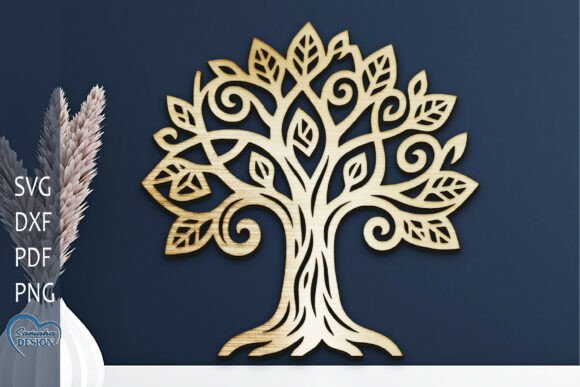
What sets Tree of Life laser cut wall decor apart from other wall art formats is the interplay between positive and negative space. The design relies on the removal of material to define the branches, roots, and leaves. This creates a visual depth that changes depending on the lighting in the room and the angle from which it is viewed. When you purchase a digital file for this purpose—often available in a ZIP archive containing SVG, PNG, DXF, PDF, and EPS formats—you are acquiring a blueprint that can be adapted to various manufacturing methods.
The versatility of these files allows for significant customization. You are not limited to a single size; you can increase the scale of the design to create a commanding focal point in a living room or reduce it for a subtle accent in a hallway. However, this scalability comes with technical caveats. While enlarging a design generally preserves detail, reducing the size requires careful consideration of the "thin elements." The delicate tips of branches or fine root systems may become too fragile to survive the cutting process or installation if the overall dimensions are shrunk too aggressively without adjusting the line weights.
Evaluating Material Options: Strengths and Tradeoffs
The aesthetic and durability of your final piece depend heavily on the material chosen. The recommended materials for Tree of Life laser cut wall decor typically include plywood, MDF, acrylic, plexiglas, metal, cardboard, and paper. Each offers a distinct look and set of practical considerations.
- Plywood and MDF: These are the most popular choices for a warm, organic feel. Plywood, particularly birch, offers a natural grain that complements the tree motif beautifully. The recommended thickness for wood is often 6 mm, which provides enough structural integrity for hanging while remaining light enough for standard wall anchors. MDF (Medium Density Fiberboard) is smoother and easier to paint, making it ideal if you plan to apply a solid color finish. However, both materials are susceptible to moisture and may warp in high-humidity environments like bathrooms.
- Acrylic and Plexiglas: For a modern, sleek appearance, transparent or colored acrylic is an excellent alternative. These materials allow light to pass through, creating stunning shadow effects when backlit. They are durable and moisture-resistant, suitable for various rooms. The tradeoff is that acrylic can scratch more easily than wood and requires protective film during the cutting and installation process. Additionally, the reflective nature of plexiglas might clash with certain rustic or bohemian interior styles.
- Metal: Metal cuts offer the highest durability and a sophisticated industrial or contemporary edge. They can be powder-coated in any color and are immune to warping. However, metal is significantly heavier, requiring robust mounting hardware, and the cost of material and cutting time is generally higher than wood or acrylic.
- Cardboard and Paper: These are best suited for temporary installations, event decor, or prototyping. While cost-effective and easy to cut, they lack longevity and are highly sensitive to environmental factors. They are rarely suitable for permanent home decor unless framed behind glass.
Scalability and the Challenge of Thin Elements
One of the primary advantages of owning the source files (SVG, DXF, etc.) for Tree of Life laser cut wall decor is the ability to resize. However, users must understand the relationship between scale and structural integrity. Laser cutters have a minimum kerf (the width of the cut) and a minimum bridge width (the smallest amount of material that can remain between two cuts).
If you decide to reduce the design, you must evaluate the thin elements carefully. In a large 4-foot version, a branch tip might be 2mm wide, which is sturdy in plywood. If you scale that same design down to 12 inches without modifying the vector paths, that branch tip could shrink to 0.5mm. At this size, the material may burn through, break during handling, or snap under its own weight. Conversely, when you increase the size of a design, you generally face fewer structural issues, but you may need to consider how the layers align if you are creating a 3D multi-layered effect. Larger pieces may require internal bracing or a backing board to prevent sagging over time, especially when using flexible materials like thin acrylic or 6mm wood.
File Formats and Compatibility
When sourcing your design, ensuring you have the correct file format is crucial for a smooth production process. A comprehensive ZIP archive should ideally include multiple formats to cater to different software and machines:
- SVG (Scalable Vector Graphics): The industry standard for web-based design tools and many laser cutting software suites. It preserves vector data, allowing for infinite scaling without quality loss.
- DXF (Drawing Exchange Format): Widely used in CAD programs and industrial laser cutters. It is highly reliable for precise dimensioning.
- PDF and EPS: Excellent for graphic designers using Adobe Illustrator or CorelDRAW. These formats maintain vector integrity and are easy to edit before sending to the cutter.
- PNG: While not a vector format, a high-resolution PNG is useful for previewing the design, creating mockups, or using with CNC routers that rely on bitmap images, though it is less ideal for precision laser cutting.
Having access to these varied formats ensures that whether you are using a hobbyist diode laser, a professional CO2 machine, or outsourcing to a local fabrication shop, you will have a compatible file ready to go.
Making the Decision: Is This Decor Right for You?
Deciding whether Tree of Life laser cut wall decor is the right choice for your space depends on your specific goals and constraints. This option is ideal if you value customization, enjoy the aesthetic of precision engineering, or want a piece that interacts dynamically with light. It is particularly well-suited for living rooms, entryways, and offices where a statement piece is desired.
However, there are scenarios where alternative options might be preferable. If you live in a very humid climate and cannot control the environment, solid wood or MDF might warp, making metal or high-quality acrylic a safer bet. If you need a purely temporary solution for a photoshoot or a party, investing in 6mm plywood may be overkill; cardboard or heavy paper could suffice. Furthermore, if your wall cannot support significant weight, a large metal cutout might be impractical compared to a lighter wood or acrylic version.
It is also worth considering the finish. Laser cutting leaves characteristic burn marks on wood, which some find charming and rustic, while others may prefer a sanded and painted look. Acrylic edges can be flame-polished to clarity or left matte. Your willingness to engage in post-processing (sanding, painting, assembling layers) should influence your material choice.
Final Thoughts on Customization and Support
The beauty of Tree of Life laser cut wall decor lies in its adaptability. Whether you choose the natural warmth of 6mm plywood, the modern sheen of acrylic, or the permanence of metal, the result is a personalized artifact that carries deep symbolic meaning. By understanding the limitations of thin elements when resizing and selecting the appropriate material for your environment, you can ensure a successful project.
Remember, working with digital files and physical materials often raises unique questions regarding machine settings, layer alignment, or mounting techniques. If you are unsure about how to adapt a specific file to your machine or need advice on material thickness for a custom size, do not hesitate to seek guidance. Many creators and suppliers encourage communication to ensure your project succeeds. Please, feel free to contact me if you have any questions regarding file compatibility, material recommendations, or design adjustments. Making an informed decision now will lead to a stunning, lasting addition to your home.